Saturday, September 26, 2009
Banks
Why do banks close at midday on Saturdays? They're open 9-5 during the week, when everyone else is at work, but when everyone else has time to use the banks, they close early. This really annoys me.

Dorian Gray
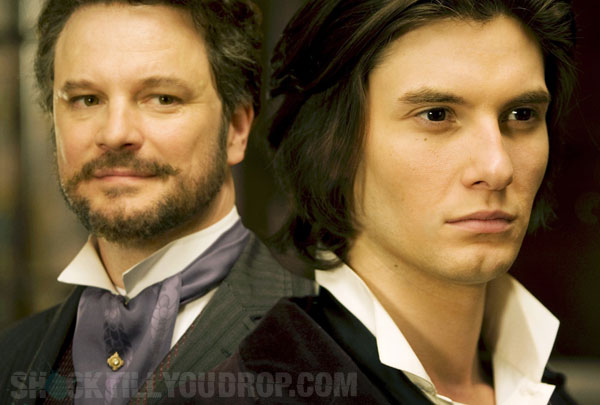
Thing 1: the film is good. It is exciting and gripping. Not the sort of film you’d say you enjoy as such, but a good experience. Ben Barnes is very good in the lead role. Apparently it’s quite different from the book, because the book has very little plot and is basically just Oscar Wilde rambling and trying to show off how clever he is. But the plot of the film is good. For a fuller review, see James Doc's blog.
Thing 2: the film is rated 15, which is a joke. It is easily an 18. Mild horror, quite a bit of strong gore, some drug use, and a LOT of sex. Fully nude sex scenes, orgies, hetero and homosexual. Just as the Dark Knight should have been a 15 for the violence and threat, so this should be an 18 for the sexual activity. However, while I have proved that the Dark Knight should have been rated 15 by the BBFCs own guidelines, I cannot prove that Dorian Gray should be an 18. The BBFCs guidelines do indeed place Dorian Gray as a 15. This is just another example of how film classification standards have changed. Comparing this to a film like the Usual Suspects (rated 18), there is no question that Dorian Gray should have a higher rating.
Monday, September 21, 2009
The language of love
The language people use to describe romantic relationships in Britain is appalling. It needs reviewing. I have, at the moment, three problems with it.
1. ‘Going out with’. This sounds stupid. The alternatives are either too old-fashioned (walking out with, courting) or too American (dating). We need a new phrase.
2. ‘Asking out’. Similar to above. We need a new phrase.
3. ‘Fancy’ as in ‘I fancy her’. This also sounds rubbish, but there is a further problem. With the above 2 phrases, at least everyone knows what they mean. With ‘fancying’, there are at least 3 different meanings that people have:
a. Fancy = find physically attractive. On this basis I fancy loads of people, including many I’ve never met but have seen in films or bands.
b. Fancy = have a crush on. The phrase ‘have a crush on’ is also poor, but people do seem to have a consistent idea of what it means, even if they can’t put it into words. This is a bit more intimate than meaning (a) – having a crush on someone requires at least one meeting with that person, and usually involves an attraction to at least parts of their personality.
c. Fancy = want to ‘go out with’. An actually prospective boy/girlfriend. Having thought about it, you actually want a romantic relationship with this person – it’s more than just a crush.
‘Fancy’ is an awful word because it sounds stupid AND has no clear meaning. We need a new phrase.
For about three years I have been trying to come up with better ways of saying ‘going out with’, ‘asking out’ and ‘fancying’. I have failed so far. So I open it up to anyone reading this blog – please make suggestions!
Satisfactory new words or phrases may require re-defining existing words, making up new words, or stealing ideas from other languages. If something is suggested that I like, I will start using it, because I really hate the current language we use for these things. Be creative, and get suggesting!
Saturday, September 19, 2009
Why Men Hate Going To Church
‘Why Men Hate Going To Church’ by David Murrow is the best and most important Christian book I have read.
As expected from the title, the book is about the gender gap in Christianity and explains why many men are disinterested in church. It looks at spirituality, psychology, biology, and clearly explains how most churches are geared at women rather than men. It explains why this is such a problem, and why it is crucial that the church is called back to men. It also suggests many things that churches, leaders, and Christians in general can do to change the situation.
I won’t attempt to describe what the book says, because I will end up just quoting it all. Every page is packed with so much truth it’s incredible. Every minute or so I found myself getting very excited about how right the book was in what it was saying. By the way, Murrow is clear that he is not suggesting a male-dominated church – he’s suggesting a balanced church, but the church at the moment is very unbalanced.
I am not exaggerating in saying that this is the one book I think all Christians should read. Seriously – what this book says could completely change Christianity and solve the problem of the gender gap. Sorting out the problem will not only balance the genders however, it will revitalise the church in every area.
Read this book! Get it from Amazon here, or ask to borrow my copy.
Tuesday, September 15, 2009
Oasis top ten
Joe beat me to this, but as Oasis have recently split, a top ten seems in order:
1. Slide Away
2. Stand by Me
3. Don’t look back in anger
4. Live Forever
5. Wonderwall
6. Little by little
7. I hope, I think, I know
8. Champagne Supernova
9. Magic Pie
10. Some might say
I offer no commentary on this order (I can’t be bothered at the moment, and it was also produced with minimal thought in about 4 minutes), but if you wish to comment (either in agreement and adoration or disagreement and abuse), please feel free and I will endeavour to justify my selections.
Monday, September 14, 2009
Texting
I have noticed a trend in texting patterns: teenagers use texts to have full conversations much more than people in their twenties, who use texts mainly for ‘business’ e.g. arranging meeting places, checking details, asking single questions.
I think there are two possible reasons for this.
Reason 1: Teenagers simply use texts for conversation more. It’s part of the culture of teenagers. People in their twenties didn’t experience this when they were teenagers because mobile phones were very new then. Therefore in the future we can expect those who are currently teenagers to change their texting patterns.
Reason 2: The pattern of phone usage is changing, starting with teenagers who have more time on their hands. As phones become able to do more and more things, teenagers are relying on them more and more conversation is texted rather than spoken. In the future, we can expect this trend to infiltrate people in their twenties and above.
I hope the reason for the pattern is reason 1. Reason 2 would worry me, because the best way to conduct relationships is in person, and I think that even speaking on the phone is closer to being ‘in person’ than texting (or emailing, or facebooking etc.)
Monday, August 31, 2009
I'd forgotten...
I’ve just finished reading the Harry Potter series. Here are some things I’d forgotten:
I'd forgotten how much I really do love these books.
I’d forgotten how action packed the seventh book is – it really is non-stop.
I’d forgotten how brave Snape is.
I’d forgotten how much I love Hermione.
I’d forgotten how strong the relationship between Dumbledore and Hagrid is.
I’d forgotten how idiotic the ‘Ron speaks parseltongue’ thing is.
I’d forgotten how dramatic the change in Kreacher is in book 7.
I'd forgotten how truly awesome Luna is.
I'd forgotten how much I disagree with the inclusion/exclusion of certain deaths.
There are probably many more I could mention, but those are some of them.
Diving
This is a blog about football, so if you were hoping for Tom Daley, feel free to stop reading now.
Last week, Eduardo won a penalty for Arsenal against Celtic by diving. The penalty was given, and scored, but replays showed no contact and clear simulation. UEFA have decided to charge the player with ‘deceiving the referee’, which could result in a two-game ban.
At the weekend, Arsenal played Manchester United. During the game, Wayne Rooney won a penalty for United. He was brought down by the Arsenal goalkeeper Manuel Almunia. Replays showed that there was a small amount of contact between Almunia’s hands and Rooney’s feet, but also that Rooney had begun to fall before the contact.
The difference between these two penalty incidents is this thing called ‘contact’. But, as replays clearly showed, the ‘contact’ in the second incident was insignificant because Rooney had already begun to tumble. In fact, had Almunia been able to withdraw his hands in time, Rooney would have tumbled without contact, in just the same way as Eduardo did a few days before.
It seems that referees make penalty decisions based on contact. Assuming the defending player doesn’t get the ball, if there is contact a penalty is given, and if there isn’t it is not given and the attacker is sometimes booked for diving.
This is flawed, because there are all sorts of ‘contact’ in penalty areas at set pieces and in open play. Imagine if players went down whenever there is contact – based on the current decision-making, referees would have to give penalties every few minutes.
The deciding factor shouldn’t be ‘contact’ but ‘significant contact’, i.e. ‘is the contact made sufficient to bring the player down?’ In the case of Rooney, the contact made wasn’t sufficient to bring him down, so the penalty should not have been given.
Of course, to make these decisions, video replays would be needed. Just as they are needed for goal-line and offside decisions. I still cannot see the problem with introducing this technology to football. In fact, a tennis-style challenges system could work, were the captain of the team has, say, three challenges per half which they can use to challenge penalty/goal/offside decisions. Critics would say that this would disrupt the flow of the game. Rubbish. The flow of the game is already disrupted by players protests about these decisions. Why not give them an appropriate system to challenge referees decisions?
Saturday, August 15, 2009
False starts
In athletics, the false start rule used to be:
If you false start, you get a warning. If you do it again, you are disqualified.
From next year, the rule will be:
If you false start, you are immediately disqualified.
I am happy with either version - the old one made for more build-up and tension, but did mean things ran over.
However, the current rule is a joke. Currently:
If anyone false starts, the whole field gets a warning. Anyone who then false starts is disqualified.
For example, today, in a World Championship 100m quarter final, lane 6 false started. Everyone got a warning. Then, lanes 2 and 3 false started and were disqualified. Lanes 2, 3 and 6 all made the same mistake, but lane 6 wasn't disqualified because he did it first.
This is the number one stupidest rule in sport. I remember thinking this when they introduced it, and I am delighted to see it being changed for next year.
Rant over.
Tuesday, August 11, 2009
Anberlin

Today, a sixth band has joined British Sea Power, Delirious, Idlewild, Lifehouse and Mew in my ‘inner circle’ of favourite bands. This band is Anberlin.
I discovered Anberlin about a year ago when I got their third album ‘Cities’, which is one of my favourite albums of all time. I soon baought their other three albums which, while not quite at the level of Cities, are strong enough, I have decided, to merit Anberlin a place in my inner circle.
While listening to the four albums over the last few weeks, they simply have enough songs of a high enough quality to be ranked alongside Idlewild et al. For anyone who’s interested (probably just James), the songs that particularly catch my ear (other than the entirety of Cities) are Never Take Friendship, The Symphony of Blasé, A Day Late, Time and Confusion, The Feel Good Drag, Audrey Start the Revolution, Dance Dance Christa Paffgen, Foreign Language, Change the World, Cold War Transmissions, Glass to the Arson, Love Song, Cadence, The Resistance, Breaking, Blame Me, Retrace, Disappear, Breath, and Burn Out Brighter. Yeah, that’s a lot of quality songs, and that doesn’t include the 12 absolute monsters on Cities, and that is why they’re in the elite inner circle.
If you care enough, I’m sure you’re capable of Youtubing or Googling them to find out what Anberlin are like. The point of this post is mainly just to register their promotion to the elite.
Saturday, July 11, 2009
Two thoughts on The Lord of the Rings
Last night I watched The Two Towers, having watched The Fellowship of the Ring a couple of weeks ago. I’m watching The Return of the King tomorrow.
I have two things to say.
Thing one:
When I watched these films for the first few times, I powerfully drawn in to the stories and very emotionally affected by them. Now, having seen them a scary number of times, I am understandably less emotionally affected, but my sense of awe at the beauty and majesty of the film still increases with each watching.
Thing two:
While I could explin all the reasons why this film is the greatest ever (don’t even think about debating that with me!), I want to focus on one reason – the relationships between Frodo, Sam and Gollum/Smeagol are unbelievable. Fascinating just doesn’t do it justice.
 You’ve got Smeagol, once a Hobbit who has become addicted to the ring, and has been taken over by his alter-ego Gollum. Gollum has been in control for a long time but Smeagol is gaining strength through his interactions with Frodo. Both Smeagol and Gollum still desire the ring, but Gollum wants to take it now, by force, whereas Smeagol now also has a bond with Frodo and wants to serve him. (This alone would be an amazing character). Then you have Frodo, who is becoming addicted to the ring and is turning into another Gollum, but is placing his hope in the possibility of redemption he sees in Smeagol. He is trudging toward Mount Doom, but each step makes what he has to do harder. And then there’s Sam, who doesn’t trust Smeagol or Gollum, and who is watching Frodo become what Gollum is, trying to help him but being rejected as Frodo turns to Smeagol more and more.
Many people say that the Frodo/Sam/Gollum/Smeagol scenes in TTT and ROTK are boring compared to the rest of the film. I don’t understand this. Of course there is less action and fighting, but the character development is gripping. I love those scenes.
I have two things to say.
Thing one:
When I watched these films for the first few times, I powerfully drawn in to the stories and very emotionally affected by them. Now, having seen them a scary number of times, I am understandably less emotionally affected, but my sense of awe at the beauty and majesty of the film still increases with each watching.
Thing two:
While I could explin all the reasons why this film is the greatest ever (don’t even think about debating that with me!), I want to focus on one reason – the relationships between Frodo, Sam and Gollum/Smeagol are unbelievable. Fascinating just doesn’t do it justice.
You’ve got Smeagol, once a Hobbit who has become addicted to the ring, and has been taken over by his alter-ego Gollum. Gollum has been in control for a long time but Smeagol is gaining strength through his interactions with Frodo. Both Smeagol and Gollum still desire the ring, but Gollum wants to take it now, by force, whereas Smeagol now also has a bond with Frodo and wants to serve him. (This alone would be an amazing character). Then you have Frodo, who is becoming addicted to the ring and is turning into another Gollum, but is placing his hope in the possibility of redemption he sees in Smeagol. He is trudging toward Mount Doom, but each step makes what he has to do harder. And then there’s Sam, who doesn’t trust Smeagol or Gollum, and who is watching Frodo become what Gollum is, trying to help him but being rejected as Frodo turns to Smeagol more and more.Many people say that the Frodo/Sam/Gollum/Smeagol scenes in TTT and ROTK are boring compared to the rest of the film. I don’t understand this. Of course there is less action and fighting, but the character development is gripping. I love those scenes.
Two ways of listening to music
It seems to me that there are two ways that people listen to music.
Some people listen to their music usually on shuffle. They also pick songs they are in the mood for to play, or to add to a new playlist. They will often buy new music as individual tracks. When buying an album, they tend to listen to the singles first.
Other people listen to their music by album. They listen to whole albums at a time and rarely skip tracks. They almost exclusively buy new music as albums, and will listen to the whole album through many times when it is new.
This isn’t a hard and fast duality, and I am sure there are people between these two extremes. I myself am much more like the second type, though I do also have a playlist of all my favourite songs which I listen to on shuffle sometimes. But in general, I listen to music as albums. For me, there are several reasons for this:
1. If I listened to music on shuffle, I would face two problems:
a. Most song transitions would frustrate me (e.g. Linkin Park into Enya, or Tim Hughes into Foo Fighters, or Holst into Anberlin).
b. I would be far too tempted to spend all my time sifting through and picking songs to listen to, which would be a waste of time.
2. The whole of an album is often greater than the sum of its parts. It is only possible to understand what an album is really about by listening to the whole thing.
3. Artists construct albums as albums, not as individual songs. It seems to me slightly insulting to the artists to effectively pick and choose parts of albums to listen to. I can’t explain this point very well, but it does seem a bit rude.
This is not to say that the second way of listening to music is necessarily any better or more valid than the first, but it’s a bit of an explanation of why I listen to music in the way that I do.
International God
We currently have a French guy called Fabien staying with us. He’s over here to work with our church for a couple of months. One of the most exciting things about this is hearing him pray in French. It’s a great reminder that God isn’t English and that he understands other languages, even if we don’t.
It reminds me of when I went on a mission to Norway to work with a church out there for a couple of weeks. I particularly remember singing Ancient of Days, with the Norwegians singing in Norwegian and the Brits singing in English. It sounded amazing. Spine-tingling. I love it when Christians from different countries unite together.
It reminds me of when I went on a mission to Norway to work with a church out there for a couple of weeks. I particularly remember singing Ancient of Days, with the Norwegians singing in Norwegian and the Brits singing in English. It sounded amazing. Spine-tingling. I love it when Christians from different countries unite together.
Tuesday, July 07, 2009
Kreuzberg
Given my love of music, I am surprised to notice that this is only the fourth blog I've written about a specific song (the others were The Weight of the World, The Cross has said it all, and In the Silence of Beginning).
Be that as it may, this blog is about Kreuzberg by Bloc Party (track 8 from A Weekend in the City).
A Weekend in the City, as an album, is outstanding. This song is just one example of it's brilliance. You can listen to the song here. Listen, and enjoy.
These are the lyrics:
There is a wall that runs right through me
Just like the city, I will never be joined
What is this love? Why can I never hold it?
Did it really run out in the strangers' bedrooms?
I
I have decided
At twenty-five
Something must change
Saturday night in East Berlin
We took the U-Bahn to the East Side Gallery
I was sure I'd found love with this one lying with me
Crying again in the old bahnhof
I
I have decided
At twenty-five
That something must change
After sex
The bitter taste
Been fooled again
The search continues
Concerned mothers
Of the west
Teach your sons
How to truly love
I love what the song is saying, and I love the comparison with Kreuzberg - very clever.
Saturday, July 04, 2009
Dancing part 2
I few months ago I blogged about dancing.
This is an extension of that blog.
I've just got back from a wedding. Always fun.
After the meal and speeches, there was an opportunity to learn a type of dancing called ceroc (pronounced sur-ROCK - emphasis on 2nd syllable). It sounded like fun.
Then the instructor said something along the lines of 'everyone has to do this, no excuses, and there'll be forfeits for anyone who doesn't).
Now, I know this was tongue-in-cheek, but it still really grated with me. I get very annoyed when it is assumed that everyone will dance, and when people look at you as though you're a freak if you don't, or else try desperately to get you to join in because 'it's fun' or 'everyone else is'. It seems that dancing is the one activity that everyone is expected to do.
So, having thought this sounded like a good idea, and having been up for having a go, I heard this statement from the instructor, Stubborn-Ben reared his head and I decided not to learn ceroc.
Shame, but it really wound me up.
One other thing. Tonight, I was asked to dance by a friend of mine. When I said no (Stubborn-Ben) she said 'ok' and didn't persist. It's only a little thing, but I was very grateful that she didn't push it.
Subscribe to:
Posts (Atom)