Note: this is a very early, initial, not-entirely-thought-through post on something I’ve been thinking about for a while, and something that, for me, is the biggest theological question. So it might not make complete sense. As always, please comment.
The other night I was driving to cell and was running late. I hit a red light, and a friend in the car joked that maybe God changed the light to red at that moment to slow me down and keep us safe.
This got me thinking, not for the first time, about how God acts in the world. It seems that there are two ways of thinking about this:
1. God intervenes at certain points in the world – to change a traffic light, to deflect a bullet, to heal an illness etc. God sometimes points his finger, says ‘zap’, and something happens. I call this the zap model.
2. God is continually doing stuff in the world, most of which we don’t notice. This is the continual model.
Biblically, there are many cases of God intervening by the zap model – mostly miracles (see here for a more detailed discussion of miracles). The main problem with the zap model is that it suggests that a lot of the time, God isn’t involved in the world. This contradicts the idea that God is constantly involved in the world, sustaining creation (e.g. Colossians 1.17).
The continual model makes more sense in my head, because it includes the assertion that God is always, without fail, involved in the world, never sitting back or ignoring it. Unusual events like the parting of the red sea can cause a bit of a problem to the continual model, but could possibly be explained by an argument along the lines of “God knew it would be needed so he set things in motion well beforehand so that, when Moses needed the sea to part, the ‘natural’ (bad word, sorry!) storm that caused the parting occurred at exactly the right time”.
Personally, it impresses me more that God could have to foresight and genius to know things that will be needed and set up millions of ‘coincidences’ a day to provide people with what they need. As has been argued before (can’t remember where), the real miracle is in the timing.
I definitely subscribe to the continual model, because of its consistency and its emphasis on God’s constant involvement. But I think it has one massive weakness – it makes prayer very difficult. The zap model makes prayer easy – you just pray for something, and hopefully God zaps. In the continual model, God is already doing loads of stuff, so it’s harder to get a clear picture of how and what to pray, and how it will make a difference, especially if God has already set lots of things in motion.
(This also touches on the question of why we pray – is it primarily to change God’s mind/plans about something, or is it primarily because we need to, to acknowledge his power and our dependence on him?)
Maybe the best model is some sort of hybrid of the zap and continual models. Anyone got any thoughts on all this?
Saturday, February 27, 2010

Tuesday, February 16, 2010
A Great Album
I was asked the other day what I look for in an album. What makes an album great? Here are my thoughts, based partly on thinking about my favourite albums.
• The music must be interesting (this discounts almost all of Green Day, for example), to my taste (if you don’t know, this is generally indie/rock-ish), and must have some oomph. By this I do not mean it must be heavy – A Day Without Rain by Enya has plenty of oomph. But I don’t like anything floppy or incidental (Jamie Cullum, for example).
• The lyrics must be inventive, poetic and purposeful (this immediately discounts most pop)
• The themes or message of the album must be something I really agree with. This is a difficult one, because it generally takes me a lot of listening to an album, and quite a bit of research, to work out all the themes. Therefore my appreciation of the music and lyrics tends to come before an appreciation with the theme. This is one reason why a Best Of album could never be a favourite of mine, no matter how good the songs are – a Best Of album is never a complete piece of work, precisely because it is amalgamated.
• The album must hang together well as a whole, rather than being disjointed (the main weakness of Mezzamorphis by Delirious). The whole should also be greater than the sum of its parts (the problem for How To Dismantle an Atomic Bomb by U2).
• X factor – the indefinable thing that makes the album special. Sometimes it’s a unique vocal style, sometimes it’s a particular run of songs, sometimes it’s the memories attached to the album.
• Strong ending – the vast majority of albums start relatively strongly and then tail off in the second half (Californication by RHCP and Hot Fuss by The Killers are great examples). A great album is as strong, or stronger, in the second half.
The single album that most completely hits all these points for me is No Name Face by Lifehouse (which I’ve written about before) – my all-time favourite album. The music and lyrics are inspired and inspiring, the theme is superb, the album hangs together brilliantly, and it has a superb second half. I think the X factor is probably the honesty and rawness of the album.
• The music must be interesting (this discounts almost all of Green Day, for example), to my taste (if you don’t know, this is generally indie/rock-ish), and must have some oomph. By this I do not mean it must be heavy – A Day Without Rain by Enya has plenty of oomph. But I don’t like anything floppy or incidental (Jamie Cullum, for example).
• The lyrics must be inventive, poetic and purposeful (this immediately discounts most pop)
• The themes or message of the album must be something I really agree with. This is a difficult one, because it generally takes me a lot of listening to an album, and quite a bit of research, to work out all the themes. Therefore my appreciation of the music and lyrics tends to come before an appreciation with the theme. This is one reason why a Best Of album could never be a favourite of mine, no matter how good the songs are – a Best Of album is never a complete piece of work, precisely because it is amalgamated.
• The album must hang together well as a whole, rather than being disjointed (the main weakness of Mezzamorphis by Delirious). The whole should also be greater than the sum of its parts (the problem for How To Dismantle an Atomic Bomb by U2).
• X factor – the indefinable thing that makes the album special. Sometimes it’s a unique vocal style, sometimes it’s a particular run of songs, sometimes it’s the memories attached to the album.
• Strong ending – the vast majority of albums start relatively strongly and then tail off in the second half (Californication by RHCP and Hot Fuss by The Killers are great examples). A great album is as strong, or stronger, in the second half.
The single album that most completely hits all these points for me is No Name Face by Lifehouse (which I’ve written about before) – my all-time favourite album. The music and lyrics are inspired and inspiring, the theme is superb, the album hangs together brilliantly, and it has a superb second half. I think the X factor is probably the honesty and rawness of the album.
Sunday, February 07, 2010
Critical of Christmas
Christmas is great and all that, but I’m a critical person and have lots of problems with how we do Christmas. Now the season of goodwill is well behind us, I think I can write about this without causing quite as much offense to people. So here are some of the reasons why Christmas annoys me.
Christmas is overhyped. The buildup lasts months, only children get genuinely excited, and the day itself tends to be anticlimactic. The shops start selling Christmas stuff in August or September (i.e. far too early). Most of the decorations and other stuff that people think they are ‘required’ to buy to make Christmas work are cheap and tacky. And very overpriced. And horrifically over-packaged. The music also sickens me. Cheap, formulaic, cheesy, manufactured pop. Absolutely no quality to it. The Christian element of Christmas (I say element, but really there shouldn’t be any other element to the celebration) gets lost in the presents and food and decorations. Christmas hasn’t been about the incarnation for a long time. It’s now a festival to money and excess. Moving on to the Christian stuff – even in religious circles, far more time, money and attention is given to presents, food etc than to Jesus. While in the secular world it might be mostly about gain, in the Christian world it is mostly about family and giving. But still not about Jesus, so still not really good enough. A central feature of many Christmas day services is the examination of presents. This is an awful thing which just reflects the general commercialisation of Christmas (and Easter, while I’m at it). Christmas services are full of unnecessary tradition, including some appalling songs – musically, lyrically and theologically. Even the best songs (there are only 2 that I feel are worthy of singing) are out of touch, dated, and clichéd. When it comes to sermons, most are unoriginal, uninteresting and uninspiring, and many focus more on Easter than Christmas, as if it is physically impossible to talk about Jesus’ birth without also talking about his death.
Christmas needs stripping down. In an ideal world, the commercial/secular element would be completely removed. In a real world, the format of Christmas should be changed as suggested here. This would at least remove the excessive hype, which is a start.
Christmas is overhyped. The buildup lasts months, only children get genuinely excited, and the day itself tends to be anticlimactic. The shops start selling Christmas stuff in August or September (i.e. far too early). Most of the decorations and other stuff that people think they are ‘required’ to buy to make Christmas work are cheap and tacky. And very overpriced. And horrifically over-packaged. The music also sickens me. Cheap, formulaic, cheesy, manufactured pop. Absolutely no quality to it. The Christian element of Christmas (I say element, but really there shouldn’t be any other element to the celebration) gets lost in the presents and food and decorations. Christmas hasn’t been about the incarnation for a long time. It’s now a festival to money and excess. Moving on to the Christian stuff – even in religious circles, far more time, money and attention is given to presents, food etc than to Jesus. While in the secular world it might be mostly about gain, in the Christian world it is mostly about family and giving. But still not about Jesus, so still not really good enough. A central feature of many Christmas day services is the examination of presents. This is an awful thing which just reflects the general commercialisation of Christmas (and Easter, while I’m at it). Christmas services are full of unnecessary tradition, including some appalling songs – musically, lyrically and theologically. Even the best songs (there are only 2 that I feel are worthy of singing) are out of touch, dated, and clichéd. When it comes to sermons, most are unoriginal, uninteresting and uninspiring, and many focus more on Easter than Christmas, as if it is physically impossible to talk about Jesus’ birth without also talking about his death.
Christmas needs stripping down. In an ideal world, the commercial/secular element would be completely removed. In a real world, the format of Christmas should be changed as suggested here. This would at least remove the excessive hype, which is a start.
Credits
When I go to the cinema, I usually stay to watch the credits. This is for 3 reasons:
1. I've paid good money to see them
2. People have worked hard to get their names there, so I watch them out of respect.
3. It gives me a few minutes to reflect on the film and form some initial thoughts on it.
I am genuinely baffled as to why the vast majority of people do not stay to watch the credits.
1. I've paid good money to see them
2. People have worked hard to get their names there, so I watch them out of respect.
3. It gives me a few minutes to reflect on the film and form some initial thoughts on it.
I am genuinely baffled as to why the vast majority of people do not stay to watch the credits.
Second/third album syndrome
Some music critics pick up on 'second album syndrome' - the phenomenon of a band's second album being significantly weaker than their first. Other critis believe in 'third album syndrome' instead.
I took 15 of my favourite bands/artists and ranked their first 3 albums. I gave 3 points to the best album for each band, 2 points to the second beat, and 1 point to the weakest.
The overall results:
First albums: total 27 points
Second albums: total 34 points
Third albums: total 29 points
Only 4 bands registered their first album as their best, compared to 5 bands (though none of my fave six) who registered their second album as their best, and 6 bands whose 3rd album was their best.
7 bands registered thewir first albums as weakest, compared to only 1 band whose second album was the weakest and 7 bands whose third was the weakest.
I conclude from this small study that second/third album syndrome is a myth.
I took 15 of my favourite bands/artists and ranked their first 3 albums. I gave 3 points to the best album for each band, 2 points to the second beat, and 1 point to the weakest.
The overall results:
First albums: total 27 points
Second albums: total 34 points
Third albums: total 29 points
Only 4 bands registered their first album as their best, compared to 5 bands (though none of my fave six) who registered their second album as their best, and 6 bands whose 3rd album was their best.
7 bands registered thewir first albums as weakest, compared to only 1 band whose second album was the weakest and 7 bands whose third was the weakest.
I conclude from this small study that second/third album syndrome is a myth.
Sunday, January 31, 2010
Snow
The night before last it snowed in Durham, which reminded me of something I plnned to write a few weeks ago. Here it is.
Snow is fun. It looks really cool, and sledging, snowball fights etc, are very enjoyable. But after a while, it all gets annoyingly wet and cold, some of it turns to sluch, and travelling, by foot or wheels, is difficult. Snow is fun, but then it gets annoying.
The best thing about snow is not sledging or snowmans or anything like that. The best thing is the strange way that it unites people. Complete strangers will suddenly go out of their way to help each other out of a problem caused by snow. It's nice to see.
Snow is fun. It looks really cool, and sledging, snowball fights etc, are very enjoyable. But after a while, it all gets annoyingly wet and cold, some of it turns to sluch, and travelling, by foot or wheels, is difficult. Snow is fun, but then it gets annoying.
The best thing about snow is not sledging or snowmans or anything like that. The best thing is the strange way that it unites people. Complete strangers will suddenly go out of their way to help each other out of a problem caused by snow. It's nice to see.
Wednesday, January 20, 2010
Almost overwhelming
It was my birthday on Monday. Which was nice.
In the evening I played football with some friends, as is our custom on Monday evenings.
Upon my return to my house, I found about 30-40 friends gathered in my kitchen yelling 'surprise!', singing Happy Birthday, complete with party poppers, balloons, cake and presents!
It was genuinely one of the biggest shocks of my life, and made me feel almost overwhelmingly loved. It sounds cheesy, but it was just one of 'those moments'. I was still shaking an hour later.
It made me realise, as I do every few weeks at the moment, how lucky I am to have the friends I do, both in Durham and elsewhere.
In the evening I played football with some friends, as is our custom on Monday evenings.
Upon my return to my house, I found about 30-40 friends gathered in my kitchen yelling 'surprise!', singing Happy Birthday, complete with party poppers, balloons, cake and presents!
It was genuinely one of the biggest shocks of my life, and made me feel almost overwhelmingly loved. It sounds cheesy, but it was just one of 'those moments'. I was still shaking an hour later.
It made me realise, as I do every few weeks at the moment, how lucky I am to have the friends I do, both in Durham and elsewhere.
Thursday, January 07, 2010
Bridge to Terabithia
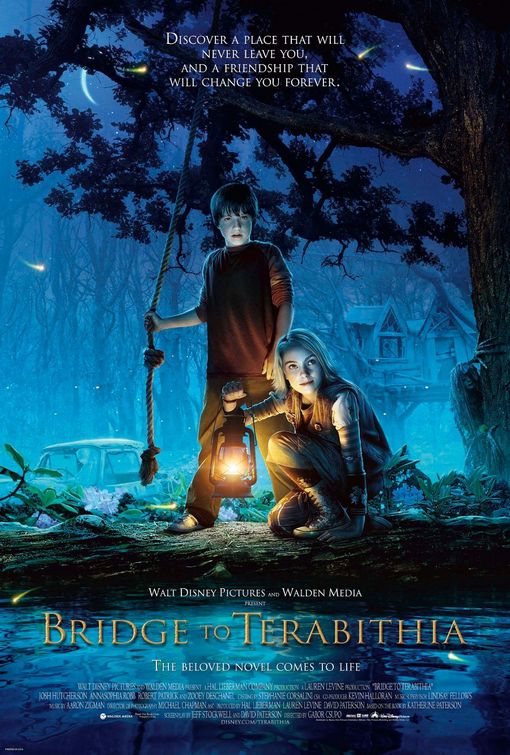
This is possibly the best film I’ve seen since The Lord of the Rings.
A few weeks ago, my sister bought me this DVD, saying I’d like it.
Now the compulsory shout-out is over, I shall explain my outrageous opening statement by means of a review.
Bridge to Terabithia is the story of 12 year old Jess Aarons. He is bullied at school and has no friends until new girl Leslie Burke arrives next door. The two become friends and invent an imaginary magical kingdom in the nearby woods. The film follows their adventures, which give them a means of escape from school and their families.
I won’t spoil any more for you.
In explanation of the opening statement:
- The story is wonderfully told, completely convincing, and surprisingly gripping.
- The acting is nothing short of outstanding.
- The line between reality and imagination is trod perfectly and the two are very cleverly combined.
- The moral of the story is vitally true but not overly preached.
- The film moved me in a way that no other film, except LOTR, ever has.
The operative word in the opening statement is possibly – Stardust, Shrek 2, The Prestige and others are all contenders, but Bridge to Terabithia is right up there with them and is, I think, a more important film to watch than any of them. If I could list five films you should watch to help you become a better person, Bridge to Terabthia would definitely be one of the five. It might even be top. It is truly superb - one of those films to which words cannot do justice. Just watch it. With tissues.
Thursday, December 31, 2009
Dr. Who
This is my first (possibly of several) attempt to explain why Dr. Who is, frankly, lame.
I have, admittedly, not seen much Dr. Who, mainly because it doesn’t appeal at all and I have better things to do with my time.
I have seen a few of the older episodes and a few of the more recent Ecclestone/Tennant ones.
It seems to me that Dr. Who has very little quality in any area.
The plots are farcical, full of cheap and ‘convenient’ plot devices. The stories are not interesting, engaging, entertaining or convincing.
The acting is unimaginative, wooden and cartoony.
The character of the Doctor is unbelievable and unconvincing. He is too powerful, a bit like superman, and therefore uninteresting.
The gadgets are a joke (‘sonic screwdriver’?!), very James Bond.
The language sounds like a six-year-old wrote it – things like the ‘Immortality Gate’ in the most recent eposide.
There are only two explanations for this.
- Dr. Who, as a programme, is lame. A bad combination of all the worst things about James Bond, Star Wars, Star Trek and Elidor.
- Dr. Who, as a programme, is a spoof (but a poorly and humourlessly done spoof).
If you are a Dr. Who fan, please comment and point out my errors or explain why you think it is good.
Avatar in 3D

Avatar – a really good film. Reasonable plot, good script, very good acting, good action, excellent special effects. It is exciting to watch and, famously, looks brilliant. In terms of effects, it’s the biggest thing since LOTR. Motion-capture has been improved from Peter Jackson’s model so that characters interact better with the environment and facial expressions are more detailed. This was required because of the large number of animated characters that required the motion capture technique (as apposed to just Gollum in LOTR).
Critics have said that Avatar is just a chance for director James Cameron to try out new technology, and the film itself is inconsequential. This is not completely unfounded, as the film is clearly centred around the new special effects, but I don’t think the rest of the film is useless. The Middle East parallel is shamelessly obvious (humans invade an alien planet and displace the helpless to gain access to a natural resource), and the name of the resource, ‘unobtainium’, is criminal, but otherwise it is a decent film.
3D – currently very overrated. This was the first film I’d seen in 3D, and I was disappointed. It didn’t look any better than the usual ‘2D’ films. The terminology is loose here, because ‘3D’ films are no more 3D than ‘2D’ films. Both are obviously still on a flat, 2D screen, but in both it can be seen that some things are closer and some further away. What ‘3D’ does, is make things “come out of the screen at you”. The problem with this is that you think something is flying towards you, and then is slides off the side of the suddenly-very-obviously-flat screen. This just looks stupid. ‘3D’ looks no better than ‘2D’, but can look stupid and hurts your eyes. In time, I expect 3D will improve, but for now, it is very overrated.
Sunday, December 27, 2009
Clapping
In concerts, performers sometimes get the crown to clap.
Why is it that crowds can never retain a steady beat while clapping? They always speed up, even when the drummer continues drumming, giving a clear beat to follow.
Are people just rubbish, or is there some deeper explanation?
Why is it that crowds can never retain a steady beat while clapping? They always speed up, even when the drummer continues drumming, giving a clear beat to follow.
Are people just rubbish, or is there some deeper explanation?
Sports Personality of the Year
Sports Personality of the Year is becoming a farce. (This rant has 2 parts)
Back in the day (when I were a lad…) the show wasn’t even called that. It was Sports Review of the Year, and was focused on an overall review of the year in sport. The awards were a small part of the programme, rather than the focus.
Now, the show has become a popularity contest. Every part of the show is geared towards getting the (relatively ignorant) public to ring in and vote, and we get a much more skewed view of the sporting year. It has become more about celebrating certain poorly-chosen individuals (see below) and less about celebrating sport as a whole.
That’s the first part of the rant. The second part is about two of this years awards – the individual and the team.
Here are the contenders for the individual award, in order of the number of votes they received.
Ryan Giggs (winner) – won 2 major domestic trophies with Man Utd and was a key player in their team, but not the most key player (that would be Ronaldo).
Jenson Button (2nd) – got lucky in signing a contract to drive a very fast car and still only just won the title.
Jessica Ennis (3rd) – Came back from an Olympic-missing injury to win the world title with several event personal bests and an overall personal best.
Mark Cavendish – won a ‘record’ (they mean British record) 6 Tour De France stages.
Beth Tweddle – After being robbed in Beijing , won double gold at the World University
Tom Daley – won the world 10m diving at age 15.
Andy Murray – got to world number 2 and won 6 events, none of which were grand slams.
Andrew Strauss – captained England
David Haye – fought one fight to win the world heavyweight title.
Phillips Idowu – won the World Triple Jump with a personal best.
2 of these people (Cavendish and Murray) didn’t actually win anything important. Others (Giggs, Button, Strauss, Haye, Idowu) won stuff, but weren’t outstanding (Giggs wasn't United's best player, Button is a racing driver and his success is therefore mostly due to the car, Strauss has a good series, but not mind-boggling, Haye won one fight and Idowu was no more impressive than any other athletics world champion. Another (Daley) did well, but won the young award, so shouldn’t get the main one too.
This leaves the ladies – Ennis and Tweddle. Ennis was superb all year, especially after the nightmare of missing Beijing
However, the award is decided by a public vote, which means minority sportspeople such as Tweddle never stand a chance.
Now to the team award. It was given to the England Men’s Cricket Team, who won the Ashes. It was not given to the England Women’s Cricket Team, who one the Ashes, the World Cup, and the World Twenty20 cup. What a joke.
Wednesday, December 23, 2009
Albums of the decade #1 – Lifehouse – No Name Face (2000)

I should also mention here some of the albums that didn’t make the top ten, and that it caused me pain to exclude.
Some of these are:
Athlete – Beyond the Neighbourhood
Coldplay – A Rush of Blood to the Head
Delirious – World Service
Editors – An End has a Start
Enya – A Day Without Rain
Idlewild – 100 Broken Windows
Lifehouse – Stanley Climbfall
Linkin Park – Hybrid Theory
Mew – And the Glass Handed Kites
Muse – Absolution
Red Hot Chili Peppers – By the Way
Sigur Ros – Takk
Sixpence None The Richer – Divine Discontent
Steve – Falling Down
U2 – All That You Can’t Leave Behind
U2 – How to Dismantle an Atomic Bomb
Albums of the decade #2 – Bloc Party – A Weekend In The City (2007)
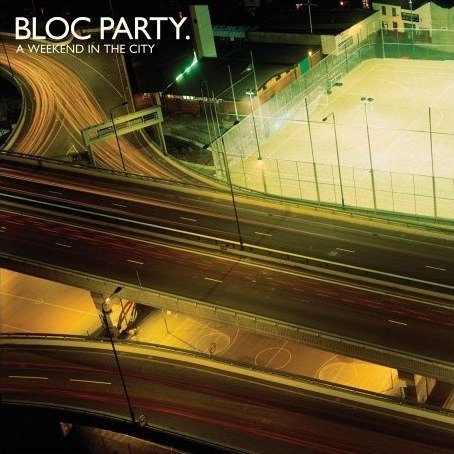
A relatively recent discovery, and some people still don’t believe that this album supersedes The Remote Part. It does. Lyrically, this is a brilliant critique of modern life, but not a depressingly negative one, like so many are. ‘Kreuzberg’ in particular is a song I think everyone should listen to and memorise. Bloc Party’s mix of rock, pop and electronica is magnificently balanced and gives Weekend an sense of excitement – it’s just a very exciting album to listen to. While it doesn’t quite present a single outstanding contender for greatest song ever, it includes some enormous tunes in ‘Song for Clay’, ‘Waiting for the 7.18’ and ‘I still remember’. Also, the lyrics to ‘Sunday’ are some of the prettiest I’ve heard. Another album that hangs together amazingly well and, although a recent discovery, well deserving of its place behind the number one.
Sunday, December 20, 2009
Albums of the decade #3 – Idlewild – The Remote Part (2002)

Subscribe to:
Posts (Atom)