Tuesday, September 23, 2008

No Name Face

There are some albums that sometimes I just need, that’s medically need, to listen to.

These are:
Escape (Sabio)
The Friendship and the Fear (Matt Redman)
Divine Discontent (Sixpence NTR)
A Day Without Rain (Enya)
Jesus Freak (DCTalk)
No Name Face (Lifehouse)

The greatest of these is the last. No Name Face is Lifehouse's first album from 2000.


Of 14 tracks, only 1 (Somebody Else’s Song) does not make me think ‘I LOVE this track’, and it’s still a really good song.

A total of 6 of the songs (Hanging by a Moment, Sick Cycle Carousel, Simon, Quasimodo, Everything and Fool) are of the level that makes me liable to crash while driving. These 6 would all be contenders for a 20-track CD of my favourite songs ever. 6 out of 20 from one album is insane.

The other 7 songs (Unknown, Trying, Only One, Cling and Clatter, Breathing, Somewhere In Between, What’s Wrong With That?) are all easily in my ‘amazing’ category. These are all songs that would dominate many albums, yet they’re all on this one album, and aren’t even in the top 6 on the album!

My latest attempt to rank the 14 tracks, for anyone who cares (that’s you Joe), is:

Quasimodo
Simon
Sick Cycle Carousel
Everything
Fool
Hanging by a Moment
Only One
Breathing
Cling and Clatter
Unknown
What’s Wrong With That?
Trying
Somewhere in Between
Somebody Else’s Song

But that’ll probably change. Anyhow, the album is amazing. It is also, interestingly, the most expensive album I have ever bought - £16.99. Bargain!

Saturday, September 06, 2008

Richard Dawkins - The God Delusion

Richard Dawkins eh? Who doesn’t have an opinion on him? Christians can’t stand him, because he attacks them, theologians can’t stand him, because he’s a lame theologian (being a biologist and all), scientists can’t stand him, because he twists scientific theories to try to disprove the existence of God and discredit any form of religion.

Actually, what I just said was a gross generalisation. It’s true that Christians do generally despise Dawkins, as do many theologians. However, while some scientists think he’s a complete idiot, others don’t have a problem with him. But the generalisation I just made is exactly the sort of think Dawkins does in his latest book, The God Delusion. This is the first of his books that, by his own admission, actively sets out to convert people from religion. And it is full of sweeping rhetoric, backed up by incomplete and often simply incorrect facts and logic. He seizes on any piece of evidence that supports his doctrine, and ignores anything else. Not a great scientific method really. A large proportion of the book is Dawkins citing various problems with certain religious beliefs or practices, which leads him to conclude that all religion is completely evil. Classic.

I could write for hours on the errors in the book, but it’ll be more interesting to highlight some of the things Dawkins does well. By the way, I’ll assume that if you’re religious, you’re not creationist. That’s a whole different blog, one I’m not inclined to write at the moment. So I’ll assume you might believe in God, but you are also happy with evolution is some form. So, the three things Dawkins does well in the book…

After the introduction, Dawkins spends a chapter critiquing the respect that society gives to religion. This is something that I think has been nudging away at my subconscious for a while, but it wasn’t till I read The God Delusion that my thoughts were clarified. Dawkins points out that religious faith is treated as if it is ‘especially vulnerable to offence and should be protected by an abnormally thick wall of respect’. We feel happy to argue and debate heatedly about Labour vs Conservative, war in Iraq vs no war, Chelsea vs United, Windows vs Macinthosh, but as soon as we talk about religion or faith or even the origins of the universe, people seem very concerned to give a huge amount of ‘respect’ to others and are much less inclined to engage in intellectual debate.
You can’t defend uttering public statements such as ‘homosexuals will burn in hell’ by claiming freedom of speech (because that doesn’t include hate speech), or freedom of prejudice, but you could claim ‘freedom of religion’. Religion trumps all!
The bottom line is that religions, like any other theories, philosophies or schools of thought, should be (but generally aren’t) critiqueable and open to debate, and should, frankly, be able to defend themselves without whining ‘but you’re insulting my beliefs’. Can you imagine such a phrase carrying any weight in any other argument? But where religion is concerned, people seem to think we have to give beliefs an extra-wide berth, no matter how ludicrous or even evil they may be. Religion and faith must accept that they, like everything else, must be open to scrutiny.
This is Dawkins’ first point, and I wholeheartedly agree with him.

The second of Dawkins’ ideas with which I agree is that many classic arguments for God’s existence are rubbish. Dawkins easily dismantles Aquinas’ five proofs, the argument from beauty, the argument from personal experience, and Pascal’s Wager. None of these hold water.
Unfortunately he also tries to tackle the argument from scripture, claiming that the New Testament is in all likelihood historically very inaccurate. Big error there. He doesn’t give any sources, so I couldn’t follow it up, but various pieces of evidence, summarised here, indicate that they are in fact accurate.
Because he skims over this issue, he manages to completely ignore the argument from Jesus, which is possibly the only argument that he could not defeat (more on this later).

The third, and last, thing Dawkins does well is the science. He is a very good evolutionary biologist, and in chapter 4 (idiotically titled ‘Why there is almost certainly no God’), he explains how the argument of irreducible complexity is flawed. Irreducible complexity is the idea that certain biological structures, such as the eye, could not have evolved bit by bit, because they require all their many parts to function – to remove just one would stop it working, i.e., it is irreducibly complex. Dawkins brilliantly explains the flaws in this argument, from an evolution point of view. It’s clear that when he’s talking about what he actually knows about, he is very, very good. By the way, he also explains that evolution is not based on ‘chance’, as is commonly thought, but is actually a highly systematic process. For this argument alone everyone should read this book. It will make you understand how evolution, a concept that in the scientific world carries as much weight as the existence of the atom, really works.
Incidentally, for anyone who goes on about how the theory of evolution is ‘only a theory – it hasn’t been proved’, I would like to point out that, in science, a theory is ‘a coherent group of general propositions used as principles of explanation for a class of phenomena’ (Dictionary.com). This does not mean it hasn’t been proved. It’s just the way scientists talk. It’s like the theory of gravity, the theory of relativity, particle theory, the theory of evolution. Just different bits of science.

Now we come to the central theme of the book. Dawkins’ writing goes something like this:

Anything that has been created is less complex than its creator. A creator cannot make something more complex than itself.

So far so good. As Dawkins says, the horseshoe doesn’t make the blacksmith. Next…

The universe is incredibly complex. Some people try to explain its existence in terms of a creator (God). But this God would have to have been created by something even more complex. And this God-creator would have had to be created by something even more complex. Where does it end? The problem of complex existence just escalates and is never answered.

Yep, that’s it. Dawkins’ proof that God doesn’t exist is the classic seven-year-old playground line ‘so who made God then?’
I have to admit that my flabber what slightly ghasted. The might of one of England’s greatest scientific minds can come up with nothing better that ‘so who made God?’
Of course, the problem is that Dawkins approaches the problem from a completely scientific point of view, and doesn’t allow for the idea that there could be things that are not physical and material. He makes no allowances for the supernatural or for an eternal God. The discourse continues…

Darwinian evolution by natural selection, however, provides a mechanism whereby more complex things evolve from less complex things. Evolution, not God, is the explanation for the universe.

This is very interesting. As a sincere scientist and a sincere Christian, I completely agree with Dawkins that evolution explains the diversity of life in the universe. I agree with him that, even though physics has not yet produced evidence of how the universe itself started, and chemistry has not yet produced evidence of how the first lifeform came about, this does not discredit the fact that the production of the universe and everything in it could one day be explained by scientific theory.
However, this does not prevent the possibility of a supernatural world, angels, demons, or God. The best evidence for the existence of God is not that the world exists. The best evidence is Jesus (I told you we’d come back to him – now we’re here).

It has been said that the historical figure of Jesus as recounted in the (historically accurate) gospels and other ancient sources, could either truly be God, or else insane or a con man. Not strictly true. He could also be genuinely mistaken (though this might come under a mild form of insane). But he certainly wasn’t just a good man or a wise teacher. He certainly was both those things, but not just them.
The sheer volume of crazy miracles that happened around him, the revolutionaryness of his teaching, the number of prophecies, over which he had no control, that were fulfilled in him, the fairly weighty evidence pointing towards his resurrection, the way he treated both his friends and enemies, all add up to a lot of evidence that Jesus of Nazareth was indeed God on earth.
This can’t be scientifically proven, like the fact that there is a sun, but I reckon it’s a lot of evidence. Enough to stop anyone conclusively saying ‘there is no God’. Jesus provided enough evidence to at least make a question of it.

In the end, when Dawkins sticks to what he knows about, he’s great. But he really doesn’t know enough about religion, or maybe he just ignores vast amounts of it. If you’re not religious, The God Delusion is worth reading for the science, but not for the attacks on religion. I’m sure you can some up with better evidence against God if you wanted to. If you are religious, it’s worth reading, again for the science, but don’t get too frustrated or offended by the rest of it. It’s better to laugh at Dawkins than take him too seriously.

Friday, September 05, 2008

Reasons why Enya is great


1. Her music is unarguably beautiful. I know of no-one who would deny this.
2. Her songs have been featured on all sorts of films ant TV programs (most famously The Fellowship of the Ring), and she was asked to write the score to Titanic.
3. She is statistically Ireland’s second biggest musical export, after U2. In most other countries, other than UK and USA, she would be first.
4. She sings in ten different languages: English, Irish, Latin, Welsh, Spanish, French, Japanese, and three invented languages (Loxian, Quenya and Sindarin). That is genius.
5. She has become so iconic of new age chillout music that such huge songs as Adiemus (by Karl Jenkins/Adiemus) and Now We Are Free (by Lisa Gerrard), are frequently attributed to her.
6. When asked what genre her music belonged to, she replied “Enya”. That is so cool.
7. She has done all this without even giving live performances.

Saturday, August 30, 2008

Give the kids more credit

There was a good article in the Metro today. Essentially it questioned the way we downplay academic achievements at GCSE and A level every year, because ‘the exams are getting easier’. We (society) give the youth of today all sorts of grief for 99% of the time, and when they do work hard and apply themselves for once, we don’t give them any credit. Is it any wonder that youth culture, and with it culture in general, is spiralling downwards?
It is true that the exams are easier than they were, but teaching is also better, and the emphasis is changing from knowledge to skills, which are harder to examine. It’s not as simple as easier exams, and we should remember to give teenagers credit for the work they do.
Truth.

Belbin Team Roles

Belbin team roles

I just did a little test in a book on teamwork, to find out my Belbin team role. It wasn’t an official test, but nonetheless fun and interesting. Apparently, my primary role is a shaper, followed by coordinator, implementer and monitor-evaluator.

According to Wikipedia…

The shaper is a task-focused leader who abounds in nervous energy, who has a high motivation to achieve and for whom winning is the name of the game. The shaper is committed to achieving ends and will ‘shape’ others into achieving the aims of the team. He or she will challenge, argue or disagree and will display aggression in the pursuit of goal achievement. Two or three shapers in a group, according to Belbin, can lead to conflict, aggravation and in-fighting.

A Coordinator often becomes the default chairperson of a team, stepping back to see the big picture. Coordinators are confident, stable and mature and because they recognise abilities in others, they are very good at delegating tasks to the right person for the job. The Coordinator clarifies decisions, helping everyone else focus on their tasks. Coordinators are sometimes perceived to be manipulative, and will tend to delegate all work, leaving nothing but the delegating for them to do.

The Implementer takes what the other roles have suggested or asked, and turns their ideas into positive action. They are efficient and self-disciplined, and can always be relied on to deliver on time. They are motivated by their loyalty to the team or company, which means that they will often take on jobs everyone else avoids or dislikes. However, they may be seen as close-minded and inflexible since they will often have difficulty deviating from their own well-thought-out plans.

Monitor Evaluators are fair and logical observers and judges of what is going on. Because they are good at detaching themselves from bias, they are often the ones to see all available options with the greatest clarity. They take everything into account, and by moving slowly and analytically, will almost always come to the right decision. However, they can become excessively cynical, damping enthusiasm for anything without logical grounds, and they have a hard time inspiring themselves or others to be passionate about their work.


How enlightening.

Bluetree - Greater Things

British Christian Rock is in decline.

The days of Kato, Steve, Quench, Bottlerockit, Jars of Clay, Jennifer Knapp, Rebecca St. James etc are gone, and the likes of YFriday are left trying to fly the flag alone.


Of course, there is one band who were around before any of these and are still going strong. They have a total of 13 studio and 4 live albums, a mix of heavy rock and calm worship, and have broken into America. I’m talking, of course, about Delirious, who number among their songs such brilliance as Lord You Have My Heart, Thank You For Saving Me, Did You Feel The Mountains Tremble, Obsession, Deeper, History Maker, King or Cripple, Investigate, My Glorious, Awaken the Dawn, Rain Down, Majesty, Inside Outside, Now Is The Time and Our God Reigns. Just in case you needed reminding. Delirious have single-handedly dominated the British Christian Rock scene for well over a decade. No-one else comes close. Fact.

However, Delirious have announced that they will be finishing as a band at the end of 2009. That is going to leave a huge gulf in the Christian music market, and I wonder which new bands will appear to fill it.

Well, until someone realises how great Strangeday are, I expect that one such band will be Bluetree. Bluetree are a 6-piece from Northern Ireland, whose debut album, Greater Things has been out for a few months now. I genuinely think these guys could be as good and as big as Delirious. That’s how much I rate them.

Greater Things has 13 tracks, but given that track 8 is a one-minute interlude and track 13 is a remix of track 11, the album basically divides into two halves – tracks 1 to 5 are lively, upbeat, passionate, and tracks 6 onwards (with the exception of Standing Out) are more chilled, calm and reflective. The two halves are very different in style, but the quality runs throughout. The songs are slightly more ‘churchy’ than the usual Delirious stuff – more like the old Cutting Edge albums. Some of the songs could be used in worship sets, others as reflections, but all are God-centred, which tends to be fairly standard for Christian debut albums.


I could go on with a detailed breakdown of the album, but I can’t be bothered. All I’ll say is:
1. Visit the Bluetree Myspace to sample three of the sample tracks, God of this City, Life’s Noise (the opening track) and Each Day.
2. Order Greater Things from Bluetree’s shop or Purashop
3. Go to the website to see what the band is all about
4. Enjoy the album!

This could be the biggest Christian album of the decade – no exaggeration!

Friday, August 29, 2008

England Football Team

This is what the team should be, assuming all players are available:

------------------------James-------------------------

Richards/Neville---Ferdinand--Terry/Woodgate---A. Cole

-----------2 of Hargreaves/Barry/Carrick------------

----Gerrard----------Rooney-----------J. Cole----

------------------Owen/Crouch


The full-back should be encouraged to play high up the pitch to provide extra width. The 2 central midfielders give extra defensive cover and act as the playmakers. Gerrard, Rooney and Joe Cole should mix it up. If Crouch plays, he is a target man and should not drop off too much. Ferdinand should be captain.

Thoughts anyone?

Sunday, August 24, 2008

Olympic Thoughts and Awards

Now it's all over, I have some thoughts on the Olympics...

• I’d forgotten how much I enjoy watching athletics.

• The medal table should be done on points, with Gold = 3, Silver = 2, Bronze = 3. We still come 4th.

• I don’t care what anyone says, the athletics are the core of the Olympics – sport at its purest. The athletics matter more than any of the other sports.

• The only sports that should be in the Olympics are those where the Olympic Gold is the biggest thing you can win. Therefore football, for example, should be removed, because the world cup is bigger.

• Rebecca Adlington was brilliant. But she does not deserve to become a Dame.

• What was with the weird pig and monkey on the TV intro?

• The GB performance was very good. However, all we did was fulfil potential. Unexpectedly good performances came in gymnastics, womens 400 hurdles, mens high jump, boxing, sailing, swimming and taekwondo – about 8 medals. Disappointments were: heptathlon, 4 track relays, BMX, mens 800, womens 1500, sailing, mixed doubles badminton, gymnastics, womens javelin, womens marathon – that’s 13 just off the top of my head. We could have done so much better. Which shows the potential is there, it’s just about producing the goods on the day.

• Having said that, we still underperformed in the athletics. Danvers, Mason and Ohurogou were great, but Sotherton, Idowu, Radcliffe, Farah, Rimmer, Sayers, Tomlinson, Pickering, Baddeley, and all 4 relays were below par. This saddens me immensely.

• Horses failed drugs tests – that just makes me laugh.

• The opening ceremony was great, but no-one will EVER beat lighting the torch with a flaming arrow. Ever.

• When were flags invented?

• Volleyball is very cool; I would like to play it sometime.

• Diving commentator Leon Taylor is incredibly annoying.

• Why are records broken much more in swimming than anything else?

• Usain Bolt is a really nice guy.

• Kelly Sotherton made me cry.

• The judging in the boxing, diving and taekwondo was a joke, and clearly biased towards the host nation. Something must be done, though I have no idea what.

• The Jamaican Olympic team was 51-strong. 39 were sprinters. Wow.

• Beth Tweddle was robbed in the high bars. She did four moves which were harder than anything anyone else did, including an original move, and only made one mistake (a step on the landing). She came 4th. Robbed.

• Jake Humphrey is an excellent presenter

• Gabby Logan is a lot better on the BBC than ITV

• Adrian Childs has annoyed me for a long time, but he’s actually quite good as a vice-presenter. But he cannot anchor.

• Hazel Irvine is the greatest – she presented over 100 hours of live action from Beijing.

• Sue Barker is past it. She says ‘er’ too much.

• Lisa Dobriskey should win a gold medal just for being the sweetest person on the planet. However, what an error – she should have won, but got boxed in, twice, and then tried to overtake on the inside. Error.

• We could have got 4 medals in the track relays. We got none. That is not good enough.

• Do not select a heptathlete and an 800m runner in the 4x4 relay. You idiot.

• Michael Johnson is the greatest pundit, in any sport, ever. Fact.

• Sarah Stevenson’s story was crazy, but not the craziest. She was denied 3 points (one head shot and one body shot). But 17-year-old Aaron Cook was denied about 8 in his Bronze playoff. Bit of a sham.

• We compete as Great Britain, but have Northern Irish athletes in our team. Therefore we should really be competing as the UK, which includes GB (England, Wales and Scotland) and Northern Ireland. This angers me.

• The British national anthem at the closing ceremony had harmonies, and the second verse! And it sounded like a Christmas carol.

• Why Leona Lewis?! Get someone with a bit of pedigree.

• I think Beckham’s a great guy, but getting him in just to kick a ball is lame. Talk about milking it.

• The symbol of the London 2012 Olympics thus far is an umbrella. Great.

• The anthem should be changed for 2012, to Land of Hope and Glory.


And my Olympic awards...

Best British moment – Rebecca Adlington in the 400m freestyle

Best British overall performance – Chris Hoy. Three Golds, ‘nuff said.

Biggest British disappointment – Kelly Sotherton came 4th. I think this was her big
chance to win

Best British newcomer – Rebecca Adlington

Best international performances – Usain Bolt and Michael Phelps, obviously

Biggest farce – Sarah Stevenson and Aaron Cook, and the taekwondo saga

Best commentary – The athletics team. Always.

Worst commentary – Leon Taylor in the diving

Biggest hopes for 2012 – Martyn Rooney, Jason Kenny, Rebecca Adlington, Lisa Dobriskey and Tom Daley

Unluckiest moment – Shanaze Read – crashing in the heats, semis and final

Most jaw-dropping moment – when Sarah Stevenson was originally not given the quarter-final win

Funniest commentary – “Oh, what a dismount! That man deserves a biscuit!”

Thursday, August 21, 2008

Random Humour

Christianity magazine sometimes has little cartoons. I found a couple of old ones which amused me...

(shown as a bookshelf)
Apocryphal books of the Bible not included in the final shortlist:
The Letter to the Editor
Psalm Like It Hot
Ready Steady Habakkuk
The Proverbs of Nancy
The Epistle to the Epistlonians
The Book of 1st Class Stamps
The Book of ASDA
The DaVinci Code: Revealed
The Gospel According to Gary
The Axe of the Apostles
The Catalogue of Argos
The Guinness Book of Records
The Illustrated 4th Book of Moses, commonly known as Painting by Numbers
The Jokes of John the Baptist - "You'll Laugh Your Head Off"


(with a picture of CS Lewis working at his desk)
One Evening, C.S. Lewis is struck by a brilliant idea for a series of books...
The Chronicles of Banarnaramia:
The Magician's Nostril
The Iron, the Fridge and the Bathrobe
The Horse and His Boil
Prince Caspar the Friendly Ghost
The Voyage of Dawn French
The Silver Stairlift
The Second to Last Battle
The Last Battle
The Timetable of the Last Train to Battle

Great Britain > Australia

The Aussies are clearly jealous of our current Olympic success, because their latest insult is 'You can only win when you're sitting down', referring, I assume, to our success in cycling and rowing. Indeed, as of 11.20 GMT 21/08/08, 19 of our 40 medals (47.5%) have come in these disciplines, plus canoeing and equestrian, which are clearly included in sitting down.
My initial comeback was "well you can only win when you're lying down". How mature of me. Indeed, looking at Australia's own tally, 21 of their 38 medals (55.2%) have come in swimming, triathlon and water polo, which involve lying down. That amused me.
Mock the Week tonight had a better comeback: "At least we're good in sports where humans are the best. Look at you - you're only good at swimming, and every fish on the planet is better at it than you!"
This could be extended - even Usain Bolt and the Jamaican sprint team would lose to a cheetah. Incidentally, did you know that Jamaica sent 51 sportspeople to the Olympics, 39 of whom are sprinters? Fact.
Anyway, put any animal in a boat or on a bike and they'd be stumped. So whatever the Aussies say, at least our heroes really are the best on the planet, not just the best of our species.
While I'm on the topic, if you were to enter an animal into each Olympic discipline, what would you choose and why?

Wednesday, August 20, 2008

Fast runners


Well done to Usain Bolt. Massive congratulations. Two Olympic Golds with two world records is unprecedented, and he looks able to go faster. And he’s only 21.

What makes him so fast? Easy – he’s 6 foot 5, and has very long legs.

Well, based on that theory, England striker Peter Crouch, at 6 foot 7, should be even faster, but in fact Crouch is slower than a lame, 3-legged, 90-year-old sloth.

Whenever I walk or run fast, people tend to complain that they can’t keep up because they have shorter legs. Tired of explaining their error, I’m writing my explanation down, so I can simply say ‘I refer you to my blog’.

Running speed is based on two things: stride length (the length of each stride, duh) and stride rate (the rate of strides, e.g. 100 per minute). To run faster, you can either take longer strides, or take them more quickly.

PhD studies show that up to speeds of about 6 metres per second, both these factors play a part in running speed, but above 6 metres per second, the factor that increases speed is in fact stride rate, not stride length. So if you want to run faster, take quicker strides. My long legs are of no help to me above 6m/s.


If you are already bored of the science and maths, think back to Peter Crouch – why is he so much slower than England compatriot Michael Owen? Because Owen moves his legs faster, even though he has little legs.

On top of this, it is possible to overstride, which means taking strides that are too long for your body to cope with. This slows you down. There is an optimal stride length for each person. Mine is probably longer than yours, but that means that each of my strides takes more energy, because I move my leg further. Each of your strides takes less energy, but you can take more of them.

There is an argument that taking more strides is more tiring because of the energy needed to lift the feet against gravity. Probably true, but I suspect insignificant. If it was significant, Crouch would be faster than Owen, and you’d be Olympic champion.

I said I'd turn to Mexico

In an earlier rant, I said that if John Terry regained the England football captaincy I would start supporting Mexico.

Damn.

I was semi-serious, because of my disapproval of Terry, not only as a captain, but as a human being. I was pretty sure Rio Ferdinand would get the job, so wasn't too worried about making such rash promises. Now, however, Terry has been named captain by manager Fabio Capello.

Unfortunately I can't bring myself to abandon England, but I'm definitely not happy with the choice. Just wanted to reiterate that.

Monday, July 28, 2008

Dancing

A few definitions from Dictionary.com:
• to move one's feet or body, or both, rhythmically in a pattern of steps, esp. to the accompaniment of music
• to perform or take part in (a dance): to dance a waltz.
• a successive group of rhythmical steps or bodily motions, or both, usually executed to music.

I think the fist and third of these are inadequate because they would include tapping one’s foot as dancing. This certainly isn’t the way the word is commonly used.
It seems that when people talk about dancing they either mean performing or taking part in a dance (e.g. a waltz), or the improvised body movements that occur to popular music. It’s the second of these that I wish to discuss, and it’s a discussion that’s been brewing for years. Sorry to anyone who’s offended by it – none intended.

I don’t dance much. There are many reasons for this, one of which is that I don’t like the music. I struggle not to hit something when The One And Only is played, so I’m not about to stand up and start bopping with an expression of enjoyment on my face. I’m quite fussy about my music, and it’s usually not the danceable type. The main exception is ska music, though some people would debate whether skanking counts as dancing. Because I don’t dance much, I’ve had plenty of time to watch other people dancing, and I have made a few observations.

Some people are really good dancers – they are aesthetically pleasing to watch. These people are either technically really good, or very inventive (a friend of mine mimes every individual word in some songs, it’s genius).

Some people can get by – nothing impressive but not embarrassing to watch. They tend to wiggle a lot, and lead the way in the ‘organised dances’ (such as Reach for the Stars by S Club 7)

Some people are not very good dancers at all, but they know this and embrace it and have a good laugh at themselves. Much credit to these people.

Some people are really quite unconfident. They don’t appear to know what to do with their bodies and are actually quite hard to watch. They don’t seem to want to just dive in and see what happens and therefore adopt various coping mechanisms.

One coping mechanism is to form up in a large circle, facing inwards. These circles usually have a few people in the ‘can get by’ category (‘good dancers’ tend to be lone rangers). The unconfident seem to think that by associating with the can-get-bys, their incompetence and unconfidence will be overlooked. Because of the circular formation, participants can concentrate on singing to each other, so what the body is doing becomes less important. The dance moves themselves include swaying, bouncing on the toes, and swinging the arms.

Another coping mechanism is to ‘look cool’. This technique usually involves standing slightly slouched, with feet moving slightly, but with a determinedly relaxed expression. The key part is to survey what other people are doing and scan the outer perimeter of the room, in order to convince onlookers that you are completely unconcerned with what your own body is doing.

The most amusing coping mechanism to watch in action is the chatting. The unconfident dancer will try to wiggle for a few seconds, realise he or she is fighting a losing battle, and engage in brief (a few seconds) conversation with a nearby friend. This allows them to stop dancing for a few seconds.

In terms of relative abundance, most dance floors I have seen contain very large numbers (about 60-70%) of unconfidents, usually male. About 30% tend to be can-get-by’s and laugh-at-selves, with good dancers being very rare.
The unconfidents do not look happy to be there. They try to, but aren’t usually good enough actors. However the can-get-bys and laugh-at-selves encourage them enough to keep them there. If an unconfident is receiving individual tuition from a can-get-by, they tend to gain confidence and become a laugh-at-self, but unfortunately there aren’t enough can-get-bys for every unconfident to benefit.

The thing with dancing is that, ideally, it should be both enjoyable for the dancers and aesthetically pleasing for the onlookers. Good dancers, can-get-bys and laugh-at-selves all seem to enjoy it, and good dancers are also aesthetically pleasing. Unfortunately the unconfidents are not aesthetically pleasing and don’t appear to be enjoying themselves, although they try to make it seem so. It’s all quite upsetting to see.

Another observation: if a group activity is happening, the participants will generally invite people in the vicinity to join in. If these people don’t want to join in, they will politely decline and the participants will continue with the activity. However, if the activity is dancing, this is not enough – the participants will continually badger the onlookers to join them on the dance floor, sometimes resorting to physical action. This is another reason I don’t dance much – I’m very stubborn and the more people try to get me to dance, the less I am likely to do it. I don’t fully understand why people (and it’s often the can-get-bys) feel the need to do this but I’d be very interested to know. To be honest, it makes me quite angry when it happens.

Sunday, July 27, 2008

"Get the gospel in there"

A week or so ago I was talking to a Christian friend about my job and he asked me “what do you say when people say ‘so you’re science teacher and a Christian?’ ”. I said that I hadn’t faced that situation yet, but that I’d probably throw it back in their face with something like ‘yeah, aren’t you?’ or ‘yes, it makes more sense to me than anything else’. My point was that I’d try to make them explain why they thought the two might be inconsistent and then try to answer their queries.

My friend then made some sort of comment along the lines of “and then you’d swing it round to get the gospel in there”. What he meant was that he’d expect me, as a Christian, to manoeuvre the conversation to a point where I can hit my colleague with “God-loves-you-so-much-he-sent-Jesus-to-die-for-you”. At the time I let it pass, but it really grated with me. I have a problem with the idea that the aim of every conversation should be to talk about Jesus’ death on the cross.

Why can I not have an intellectual discussion about science and religion without trying to turn it into a preach? And who is to say that my colleague would not encounter God through that conversation, without any mention of Jesus?

The standard ‘four-point gospel’ or ‘two ways to live’ seem like very narrow views of the gospel. What about the good news of God’s love expressed through his creating and maintaining of the world, something that would flow far more naturally from a discussion of science and religion? Or what about bringing my views on abortion to a prep-room discussion, without discussing Jesus? Or trying to explain God’s love in the midst of reports of another natural disaster? There may be times to explain what I believe about Jesus, and what his crucifixion and resurrection were all about, but I don’t think I should be trying to bring that into every conversation.

I can think of little that would put me off God more than some Christian who tried to twist every conversation into a preach about my sin and Jesus death.

This approach also has overtones of seeing colleagues as projects to be worked on rather than people to be loved. The main command of God is to love, not to preach or convert. Sometimes (rarely) loving someone will involve telling them about what Jesus was all about (e.g. four-point gospel, though personally I’m not fan of that). More often it will be nothing like that. It will be helping them out with a task, giving them a gift, listening to their concerns. “Love is a verb”.

When it does come to ‘converting’, it’s about helping people move closer to God. We’re not called to make converts, but disciples – and disciples keep learning. They don’t just step across a line and stop, they charge right across the line and keep running. Therefore Christians should be focused on where they and others are going rather than where they are now. It’s not about getting a confession of faith, or repeating a prayer. It’s just about helping people understand what God is like and what he’s done (and that is not limited to the cross, though it includes it).

The central point of a person’s walk with God may not be the point when they say they believe (I didn’t even have this moment!), but the point they first experienced someone giving them something for nothing, or when they stood on top of a mountain and saw the beauty of creation, or the time they went to church at Christmas and were challenged with a different thought about baby Jesus, or even when they lie on their death-bed and look back on God’s faithfulness.

So if I’m asked how I can be a Christian and a scientist, I probably won’t mention Jesus, and I might not even mention my God. I might just explain how I see no contradiction between science and religion, or I might describe my worldview of the natural and the supernatural. But that might be exactly what my colleague needs. They may have been preached Jesus at dozens of times and know all the theory but have hit a stumbling block with science. Then surely helping them past that would be much more appropriate than hitting them with two ways to live again. Our conversations should be natural and our lives focused on expressing God’s love in all sorts of ways. And we shouldn’t narrow down God’s work to a three day period 2000 years ago.

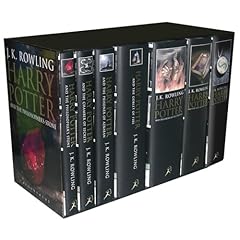
Long Harry Potter ramble

WARNING: SPOILERS AHEAD! If you’ve read the books, go ahead and read this. If you haven’t, I ask you not to spoil them for yourself. However I have no problems putting this online because if you wanted to find out what happens you could have found out on any number of websites already.

I originally wrote this about 9 months ago, after reading Deathly Hallows, and posted it as a Facebook Note, but I’ve updated bits since then and now have a blog to put it on.

I often find I think best by writing, so this is primarily to help me compose my thoughts on the Harry Potter series, but if you’re reading, I hope you enjoy it and it gives you some interesting ideas about them. So this isn’t really a review, it’s more of a spiel of some of my thoughts about the books. There will be some specifically about book 7, but some of it will be more general. I’ll start with a little of my history as a HP fan.


Fan History
I first read Philosopher’s Stone in 1999, I think, about the time that ‘Prisoner of Azkaban’ was released. I’d tried it about a year before, but I didn’t like it (!). I confess that I got bogged down in the early chapters which are, I still maintain, the weakest part of the series. I think it was the endless letters and chasing around hotels, and the fact that the intrigue of the first chapter seemed to disappear. Also, in contrast to the rest of the series, those first few chapters have a distinctly childish tone to them which, and as by this time I was on to LOTR, I found a bit beneath me. By sister and brother both read books 1 to 3 and nagged me to read them, so I gave it another try, and was addicted very quickly. I read and re-read 1-3 that year, and subsequently read 4 to 7 as soon as they came out. I even permitted myself to experience the carnage of a midnight opening for ‘Deathly Hallows’.

8 years later and the books are my all-time favourites, having read them all an embarrassingly large number of times. I do follow the general internet fandom, though I don’t contribute because I find the triviality of most of it incredibly annoying!


The Success of Harry Potter

Harry Potter is obviously huge. Some of the statistics about book sales, money and changes in childrens reading trends are just scary. And of course, all the spin-offs – films, charity books, websites, a theme-park (the thought always makes me want to puke) and vast amounts of merchandise (incidentally: Death Eater masks?! Does no-one else have a problem with this? We might as well be encouraging kids to dress up as Nazis, for the DE’s have very similar views. OK so the DE’s are fictional (sorry to break that to you) but it’s promoting the same values…ok rant over (for now)).

People seem to struggle to work out exactly what makes the books so popular. They have great plots…but so do many other books. They have engaging characters…so do other books. What makes HP so uniquely successful?

Firstly, it is NOT clever marketing. Marketing has to have something to work on. The adoration of these books is there without the marketing; marketing just makes sure people do actually buy the books (not that most fans need any persuasion).
I could write for hours on the brilliance of the plot, the joy of getting to know the characters, and the vast number of themes spanning the books. One day I probably will. But for now, I think that the success of the books is down in part to the fact that they were released bit by bit over ten years. This means that before the release of the next book there is a year or two of questioning, theorising and speculating about it based on new information from the last book. This is what fandom thrives on – trying to answer the questioning, trying to guess Rowling’s mind. Of course, HP is not the only series to be released this way. But HP has another feature too: a vast percentage (possibly over half) of the story happens before the time in which the main story takes place. This is what makes the books so exciting to read. I must admit I’m not yet sure how this works, but there is something in the finding out of information from the past that helps piece together the present and future that is immensely exciting to the reader. And because this happens bit by bit over seven books and ten years it is all the more tantalising.

In addition to this, there is an interesting point that the word ‘fandom’ generally applies to the fantasy genre. Popular examples include Star Wars, LOTR, Buffy, Star Trek, X-Men: all part of the fantasy genre (fantasy used in its wider sense, including much sci-fi, horror and mythology). To any non-fantasy buffs out there, part of what makes modern fantasy literature so intriguing (at least to me) is that the story and the characters are only half of what is presented. The other half is the description of the very world where the stories take place, be it Middle Earth, Narnia or wherever. This includes the places but also the politics, the religion, the magic system etc.

Harry Potter can obviously be classified as fantasy and part of the draw of the books is the portrayal of the fantasy world, including the places, such as Hogwarts and St. Mungos, and also the politics (the Ministry) and the magic system (obviously throughout the books, and very much discussed among fans e.g. what happens when a secret keeper dies? How fast to curses move if they can be dodged? How can wizards sometimes cast spells without wands? etc.). But the critical thing about this fantasy world is that it could be real. It is after all set in this world that we Muggles live in, and Rowling is careful to explain why wizards (and dragons!) go unnoticed. While we know the stories are fiction, one some deep down level there is something that says “yeah, but you don’t know it isn’t real”. And that is very tantalising and adds weight to why the books are so popular.

Lastly, while other books are praised for their plots, characters and themes (what I see as the three main elements of a good story), nothing else has been produced on such a scale as Harry Potter. Roughly 3500 pages of story, most of which is action and dialogue, mean that in terms of plot and characters it is enormous. The plot covers nearly a century of history, seven years in immense detail. As mentioned before, the use of backstory and its intertwining into the main plot is nothing short of genius. In terms of characters, there are at least forty who we are very emotionally engaged with over the series (don’t believe me? Try this: Harry, Ron, Hermione, Neville, Luna, Ginny, Hagrid, Dumbledore, Snape, Riddle, Lupin, Sirius, Tonks, Fred, George, Crouch Jr, Crouch Sr, Dudley, Petunia, Regulus, Kreacher, Dobby, Winky, Firenze, Fleur, Xenophilius, Draco, Narcissa, Lucius, Bill, Arthur, Molly, Percy, Ernie, Aberforth, Wormtail, Lily, James, Trelawny, McGonagall, Slughorn, Griphook…there’s 42 to be going on with). That’s a huge number for one series, and the most poignant and moving moments of the series are ALL character driven, whether it be Lily’s sacrifice, Molly’s boggart, Dumbledore’s childhood, or just about any moment involving Luna (by the way, that girl is truly amazing!). On top of this, Rowling covers a massive number of themes in her books. As she herself has said, the primary theme is death (and I would add also the power of love over death), but how about these: life after death, love, sacrifice, prejudice, loyalty, fate, the greater good, the purity of souls, fear, the future, power, fatherhood, bravery…there will be more. In short, the scope of these books is both huge and highly detailed.


The Criticisms
However, the books have their critics, both literary and religious. The literary focus on things like the books not being classic literary masterpieces, being full of clichés, being intellectually unstimulating and just being made up of material borrowed from mythology. To these I would say, so what? Who says that a great book has to be technically of a high standard or highly intellectual? These books do not try to change the thinking of philosophers or further thinking on authorship. Rather they try to tell a brilliant story, with many deep and engaging characters and a range of very interesting views on the world. And they do an excellent job of it.

As for the religious critics, I find it amusing that 99% of them are adamant that they have never read the books and never will. Therefore they are, of course, ideally informed to comment! Anyone who reads the books can clearly see that this magic is nothing like the occult practices that God tells people to avoid in the Bible. I notice that no-one condemns the Narnia or Lord of the Rings books for their use of magic. Perhaps because they don’t give details of the actual spells? Oh come on – does anyone really think that saying “wingardium leviosa” will actually make something fly? Or maybe it’s because of the Messianic themes in Narnia and, to a lesser extent, LOTR. Well maybe they should try reading the end of ‘Deathly Hallows’.


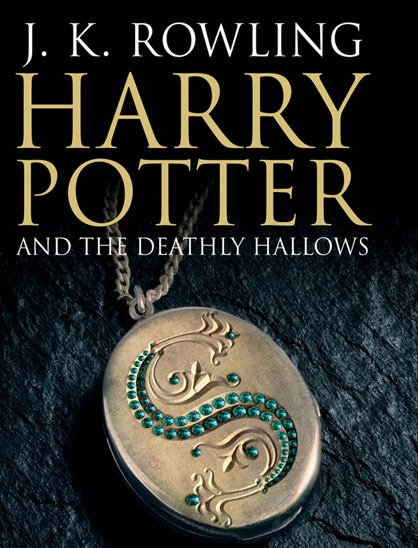
Thoughts on Deathly Hallows


Which brings me nicely on to book seven itself. I had to cover it at some point. I am interested that everyone I have spoken to about ‘Deathly Hallows’, and most of the fan reviews on the internet, say exactly the same thing, in four parts:

1. something along the lines of ‘it was amazing’ or ‘I loved it’
2. a single word: ‘but’
3. a list of the various things they are unsatisfied with
4. a reassuring statement such as ‘but I did love it!’

My initial reaction was the same. The problem is that with two years of speculation and expectation after ‘Half-Blood Prince’, everyone wanted the perfect book, the perfect ending. Unfortunately ‘perfect’ depended on who you talked to, and in the end no-one was going to be wholly satisfied (well maybe one randomer somewhere, but no more). The most common thoughts before release were about who would die and who would end up with whom (how shockingly narrow-minded of the fan base, if all they can debate are these). However I had my theories too. My pre-release predictions were almost all bang on in terms of deaths. Admittedly my slightly wild McGonnagall-is-a-death-eater theory didn’t work out (I am glad she was good though!), but I got Neville-will-be-herbology-teacher (something I’ve been saying since about 2000!), all-four-Marauders-will-die, Draco-will-be-redeemed and Snape-is-loyal-to-Dumbledore spot on. I was quite pleased with myself.

The only death I got wrong was Ron’s (lack of). After reading it, I believe that the book could have been improved if Ron (and possibly Ginny) had died. I just think that having spent six books with Ron as at best a loyal sidekick and at worst comic relief, and then having him be so crucial in Deathly Hallows and go through all that he does over the course of it, it would have been so much more moving had he died. The trio broken at last, Hermione left alone. Pure bittersweetness. As it was, I felt it was a bit too sweet and not bitter enough for my taste. Of course, had Ginny also died, Harry’s journey would have been so much more heartbreaking. Killing Tonks was ludicrous – the series has enough orphans already, and Lupin was always going to die (note that Moony, Wormtail, Padfoot and Prongs died in reverse order).

Anyway, onto other things. I thought the horcruxes were dealt with well by Rowling. I disagree with the accusations of “it was all to convenient” – the point is that Dumbledore made sure it was that convenient; he’d been setting it all up from the start! (having said that, the whole Ron-Parseltongue idea was a joke) Dumbledore’s backstory was truly amazing, as was Snape’s. The hallows themselves caught me completely off-guard, but I liked them, in spite of the huge plot complexities they caused. They really opened up the themes of power, death and conquering death.

Except for Dobby’s, the deaths didn’t hit me as hard as Dumbledore’s and Sirius’s. Killing Lupin off-screen was harsh and wasteful of what could have been a great death scene. And Fred’s was just a bit rushed really – the scene later on in the Great Hall where the dead lie was much sadder. I feel that the book needed something bigger though, something to match or even exceed the deaths in books 5 and 6 (i.e. Ron).

I thought book seven concluded JKR’s themes, such as love and sacrifice, very well, and I really liked the introduction of the idea of ‘the greater good’. This is of course tied up with Dumbledore’s backstory, which challenged everything we thought we knew about Dumbledore (more on this in a minute).

The epilogue needs a mention: it seems that more has been written about those few pages than about most entire books! It seems to me that it was there for two reasons. First, to show what happened to the trio, Ginny, Neville and Draco (interestingly not Luna). It did that fairly well. The accusations of over-neatness in the epilogue are unfounded. It is neat because they all got married and had kids. Shock horror, such an unusual thing to do! The neatness is not that they all got married, but that they all survived. And I’ve already given my view on that. Having said that, I didn’t approve of the names of Harry’s eldest and youngest – naming your kids after your parents? The second reason for the epilogue is so that Harry can deliver the tribute about Snape being the bravest man he ever new. A little cheesy yes, but I think it’s fair enough to put this line in. I just think she could have done it in a less cheesy way. I was glad of the few interviews JK gave soon after the release, giving more detail of those nineteen years and beyond, most satisfying indeed (if you haven’t read any of these, they include things like HRH’s careers, Luna’s future, and even Dumbledore’s sexuality, a revelation that just adds more heartbreak to his story).

In terms of my reading of the book, I read it very quickly in about six hours because I was terrified of it being spoilt! I have to say that other than Dumbledore’s backstory, I was surprised by nothing in it. This is the problem with having such an intense fandom and two years between releases – everything had been discussed so much that I’d thought of all the things that could happen, so nothing was surprising. The price of being such a big fan.

So in the end, it wasn’t the perfect book, but it was overall a brilliant finish to an unbelievable series. It’s just a shame that we always focus on the negatives for a while. It was the same with The Return of the King film – an awesome conclusion to the trilogy, but all anyone talked about was their dissatisfaction, whether it was with Aragorn, Frodo and Sam, Saruman, the ending, or whatever. It hadn’t met people’s hopes of being the perfect film. A few years on, however, it is seen for what it is (brilliant), and we’ll come to that point with ‘Deathly Hallows’ too.


Development of the books
As I’ve read the books over the years I’ve noticed some trends. One is that, obviously, the books tend to get longer, and there is a big leap in length between 3 and 4. I think that the books become more complex as Harry matures and becomes more complex himself. This would make sense, given that they are basically all from Harry’s point of view. And it is over books 3 and 4 that Harry starts to grow up.
One great thing about living while the books were released is that there is time to form theories between releases. Of course, most of those theories get torn apart by the next book. And so do the assumptions that people have about the books.

After book 1, it seemed that this was a good fantasy story, about good versus evil, with three teenagers as the protagonists. After book two this was still true, but the darkness of the chamber of secrets, including things like Ginny writing her own death sentence, added another overtone. After book three, we realised that JKR is truly a brilliant writer, and that these stories are a lot more complex than we first thought – our view of the books was being expanded. Then book four really smashed it all apart: Voldemort was back, Cedric was dead, and suddenly the scope of these books seemed a heck of a lot bigger, and no-one knew anymore where JKR was taking us. Book five brought in the struggles of adolescence and not a small amount of disturbing talk of psychology (linked minds anyone?) and possession. Book six built on what had gone before but, while previous books had included a little backstory, six had huge amounts and this wasn’t a 7 year tale anymore, it went all the way back to the 1920s. And then book seven brought up various minor points such as Dumbledore’s Death Eater leanings, and also shocked us all, I think, with just how close Voldemort got to winning, and what that would have looked like.

So at every stage, the scope of the books was enlarged. At each stage, the fans thought they knew what the books were ‘about’, only to have their view of what JKR was doing massively expanded. I don’t think anyone in 1999 would have realised the scope that the story was to have.


Death and Love
The main themes in the books are death and love, and the relationship between them, so I should really say something about them. Various contrasting views of death are presented in the books. Voldemort sees death as an enemy to be conquered (“you know my goal, to conquer death”). This drives him to create horcruxes. In contrast, Dumbledore says death is “the next great adventure” and not to be feared. Luna clearly believes in life beyond death, and uses the voices beyond the veil as evidence. If a wizard or witch fears death, he or she can choose to remain as a ghost, instead of embracing the world beyond the veil. Frequently, Dumbledore presents his view that there are things worse than death, and he seems to be referring to living without love (“Do not pity the dead, Harry. Rather pity the living, and above all, those who live without love”). Dumbledore has much personal experience of loss of love, when his sister was abused, his father sent to prison, his mother died, his sister killed, his relationship with his brother broken, and the man he loved becoming the man he killed. He can speak with more experience than any other character about love and death. Love has power over death. Lily’s love caused her to sacrifice herself for Harry, and consequently the death curse could not harm him. Harry sacrificed himself for those he loved, and Voldemort’s curses could not hold them.

Love is what is contained in the locked room in the Department of Mysteries. “It contains a force that is at once more wonderful and more terrible than death, than human intelligence, than the forces of nature. It is also, perhaps, the most mysterious of the many subjects for study that reside there. It is the power held within that room that you (Harry) possess in such quantities and which Voldemort has not at all”. Voldemort’s lack of knowledge of love (he has never loved or been loved, having been abandoned at birth) causes him to underestimate its power, and therefore underestimate Harry, who’s greatest weapon is his ability to love so much. Even by book six, Harry doesn’t understand how exceptional he is to love so much after what he has been put through. At the very end it is love which finishes Voldemort. Narcissa betrays him for the sake of her son Draco, allowing Harry a chance to face a now horcrux-less Voldemort.

And by the way, it is also love that made Dumbledore so convinced that Snape was on his side – he believed that Snape’s love for Lily was greater than any reason for Snape to be on Voldemort’s side.
For more on love and death, see http://www.hp-lexicon.org/essays/essay-love-and-death.html.


Prejudice
A second theme that is high on JKR’s priority is that of prejudice and tolerance. Most obviously it is portrayed through the ongoing ridicule of Muggle-borns by purebloods such as the Malfoys, which escalates in Deathly Hallows once Voldemort gains power and starts imprisoning muggle-borns. The page-time given to this theme indicates its importance to Rowling, and she even had Dumbledore (who often speaks for JK) speak out against Malfoy’s prejudice when he is about to be killed.
This theme is also shown in more subtle ways. Lupin, as a werewolf, was “unemployable” after leaving Hogwarts, even though he is clearly safe. For most witches and wizards this is prejudice, but for some like Umbridge it goes further into maliciousness. There is prejudice against other races such as centaurs and goblins. Even Ron shows prejudice against giants in Goblet of Fire. Sirius is prejudiced against Kreacher, Harry against Griphook and Hagrid against the Durmstrang students. Practically all magical folk treat non-human intelligent beings as of lesser importance. The overwhelming emphasis here is on house-elves, who are at best well-treated slaves. Dobby, Winky and Kreacher are all treated appallingly by their masters until they end up at Hogwarts, and only Hermione shows any outright indignation at their treatment.

And I’ll bet most people haven’t noticed that we are all prejudiced against Slytherin. Some of this comes from Hagrid who claims that all dark wizards were in Slytherin (one exception we know of is Pettigrew, who was in Gryffindor, though I have no idea how he got there). But even without this, we are prejudiced against Slytherin, mainly because Harry is prejudiced against Snape and Malfoy, even though Snape was in the end “the bravest man I (Harry) ever knew” and Malfoy was also redeemed. Rowling has made it clear that only some Slytherins are the Death Eater type but still we have this prejudice.

In contrast to all this are Hermione and Dumbledore, who are the two characters through whom Rowling speaks. Hermione is very pro-unity both with wizards and with other magical beings. And Dumbledore is the king of second chances and giving acceptance where others won’t (Snape, Hagrid, Lupin, Dobby)


Souls and Horcruxes
One final thing that interests me in the books is the view they present on souls. It seems that while ‘life’ refers to physical life, which is temporary, ‘soul’ refers to the inner self, including thoughts and emotions. The soul seems to be eternal, hence we have ghosts and the voices behind the veil. Killing, as the “supreme act of evil” (an interesting statement given the emphasis throughout the books that there are things far worse than death) rips the soul apart, the pieces of which can be contained in horcruxes (note that ‘horcrux’ refers to the receptacle, not the soul fragment). The only way to piece back together one’s soul is to be truly remorseful.

Although the piece of a soul in a horcrux can be destroyed by physically destroying the receptacle ‘beyond repair’, it seems that the same is not true for a complete soul – destroying a persons body does not destroy the soul. This is slight speculation however, because we don’t know for certain what happens to a person’s soul once they have been killed by basilisk venom or fiendfyre – the only person in this category is Vincent Crabbe, and we don’t know what became of his soul.

Horcruxes can't generally be made by accident - the process requires the priming of the receptacle prior to the murder taking place. The exception is, of course, the vanquishing of Voldemort in Godric’s Hollow, when his soul was so unstable, having already split five times, that it split spontaneously when he attacked Harry, and part of his soul attached itself to Harry. Therefore, technically speaking, Harry wasn't a Horcrux. (Haha, that'll re-spark the 'I told you so's!). To all intents and purposes, he then functioned as a horcrux, but JKR was keen to stress that he didn't become an evil, cursed object like the diary or locket, and because he hadn't been made by the usual horcrux-creation process, he wasn't technically a horcrux, though he functioned in the same way.

(On a side note, notice that the fragment of Voldemort’s soul that spent years in Albania, possessed Quirrell, and ended up inside his reborn body, was able to gain some physical form. This blurs the boundary between soul and body somewhat!)

There is one more problem however: at the end of ‘Deathly Hallows’, how was the part of Voldemort’s soul that was inside Harry (the 7th fragment) destroyed, without destroying Harry’s body (the receptacle) beyond repair?
Having been hit with the Avada Kedavra, Harry’s soul was fine, and went off for a chat with Dumbledore, so the AK clearly doesn’t destroy a normal, complete soul, but may be that killing (i.e. physically taking life) with the AK is sufficient to destroy the soul fragment, so if the AK is used, the receptacle does not need to be ‘damaged beyond repair’. Therefore Voldemort’s AK could destroy the 7th fragment, which is inside Harry.

However, a problem comes when we ask what happened to the 8th fragment of Voldemort’s soul (the bit in his own body) after he was finally killed in the Great Hall. If it is true that using the AK can destroy a soul fragment (though not a complete soul), then Voldemort would completely be no more. However, JKR has said that he is actually forced to exist in the form we see in King's Cross limbo (in response to a question about whether he became a ghost). I think this would indicate that the AK didn't destroy the 8th fragment of Voldemort’s soul, so there is no reason to suppose that it would have destroyed the 7th fragment in the forest.

Whatever the mechanism, the soul fragment was gone. Harry’s body was killed, so normally he would have gone “on”, beyond the veil, but because his blood was still part of another living body (Voldemort’s) he didn’t. Instead he went to some sort of half-life limbo (I think this is the best interpretation of the King’s Cross scene, given the symbolism of that platform as a halfway point between the two worlds, magical and muggle. However, JKR has said that an alternative interpretation could be that "Harry is unconscious, everything Dumbledore tells him he already knew deep inside. In that state of unconsciousness his mind travels further. Dumbledore is in that case Harry's personification of wisdom; he sees Dumbledore in his head so he can come to certain insights." Anyway, Harry then had the choice to return to the living world – he didn’t have to go back. The presence of his blood in Voldemort’s veins gave him the option, it didn’t tie him to the living world against his will.

When Harry came to, he realised that Voldemort had also experienced something strange. Maybe Voldemort was also conscious of being in the King’s Cross limbo, but I’m not sure how he got there given that the AK didn’t rebound this time so his body wasn’t harmed. The soul should only be released (to limbo, or beyond the veil, or wherever) once the person is dead. But however Voldemort got there, Harry, having a complete soul, experienced a complete existence in King’s Cross limbo, while Voldemort, left with just one eighth of a soul, was reduced to something less, whatever it was.

The whole situation is further complicated by the fact that, on the very same page, we discover from Dumbledore that Voldemort killed Harry, but Harry isn’t dead. I believe that what Dumbledore means is that Harry has been killed in that his body has died and his soul has moved on (for now), but he is not finally dead and gone, his soul is not yet beyond the veil.

What is it that Dumbledore is so insistent that is worse than death? It is “living without love” – more emphasis on the great theme of love as greater than death. In King’s Cross limbo, Dumbledore tells Harry not to pity the dead, referring to the thing on the platform that we are told is Voldemort. But Voldemort can’t be dead, because he’s still alive (physically) in the forbidden forest. Therefore Dumbledore is again mixing his words and referring to Voldemort as dead in that his soul (or the fragment that remains) has departed from his body for a while, and gone into King’s Cross limbo, not that his soul is yet beyond the veil. However this still doesn’t explain how the soul fragment managed to get into King’s Cross limbo, as Voldemort’s body has not been hit by the AK this time.

To summarise all that, soul-splitting is an active process, with the intention of making a horcrux. Accidental horcrux creation can occur when a soul is sufficiently unstable and another act of murder splits the soul without the intention of the killer; in this case the soul fragment attaches itself to the “nearest living soul”. Soul fragments are destroyed when the horcrux (the receptacle) is destroyed beyond repair. Harry got into King’s Cross limbo because his blood was present in Voldemort’s body, and this gave him a choice of whether to go on or go back. I don’t yet know how either Voldemort’s soul fragment or Dumbledore got there, or how the 7th fragment of Voldemort’s soul, inside Harry, was destroyed!

One more important thing to remember: JKR has stressed that what occurred in the forest at the end of DH (and all the subsequent implications) was not scientific. Therefore we cannot say things like 'Harry could never have been killed by the Bellatrix because he was tied to life by Lily's blood in Voldemort's veins'. It's not as simple as that. the connection between Harry and Voldemort was unprecedented and no-one really knows how it works. I suspected that this was the case, but it's nice to hear it from Jo, and it's a good reminder that all my analyses should be taken as theories, and no more!